Paint Correction
Can Paint Correction Remove Scratches
Some scratches come out completely. Some improve. Some cannot be touched without repainting. Here is the fingernail test that tells you which yours is.
By Alofaina Leaga5 Minute Read
It depends entirely on how deep the scratch goes. Correction works by removing a thin layer of clear coat, so it can only remove a scratch that sits within the clear coat. Anything deeper is a different job.
The Test You Can Do Yourself
Run a fingernail lightly across the scratch, at right angles to it.
If your nail glides over without catching, the scratch is shallow and sits in the clear coat. Correction will most likely remove it completely.
If your nail catches, the scratch has gone through the clear coat. Correction can reduce how obvious it is by softening its edges, but it cannot remove it, and chasing it would mean removing far too much clear coat.
What Comes Out Completely
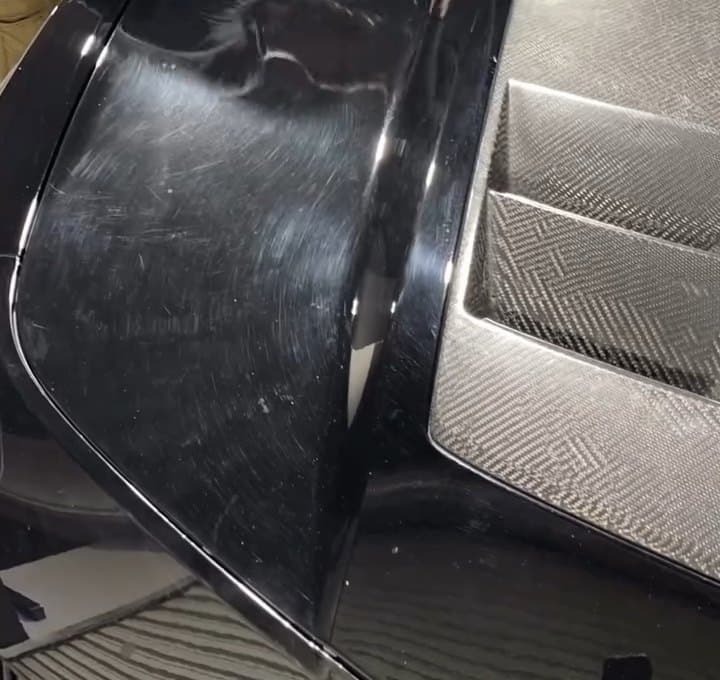
- Swirl marks from washing and drying, which is the majority of what makes paint look dull.
- Holograms and buffer trails from previous machine work.
- Light scratches that do not catch a fingernail.
- Water spot etching, in most cases.
- Haze and oxidation on the surface of the clear coat.
- Marks left by automatic car wash brushes.
This category covers most of what makes a car look older than it is, which is why correction so often produces a bigger visual change than people expect.
What Improves But Does Not Disappear
Scratches that have just broken through the clear coat can often be made significantly less noticeable. The edges get softened so they catch light less sharply, and from normal viewing distance many effectively vanish. Up close, in the right light, they are still there.
What Correction Cannot Touch
- Scratches through to the base coat or primer, where you can see a different colour in the groove.
- Stone chips, which are missing paint rather than displaced paint.
- Deep key scratches.
- Cracked or peeling clear coat.
- Dents, regardless of the paint condition over them.
These need paint repair rather than detailing, and a detailer worth using will tell you that instead of taking the job.
How Many Stages You Need
A single stage clears most light swirling and lifts gloss noticeably. A two stage cuts deeper and refines afterwards, which handles moderate defects and is the standard before a coating. A multi stage goes as far as the paint safely allows.
More stages is not automatically better. More stages means more clear coat removed, so the right answer is the least aggressive approach that achieves what you actually want.
Find Out What Yours Needs
Alofa inspects the paint under proper lighting, shows you the defects before anything starts, and tells you plainly which will come out and which will not. Send through photos of your car or read about paint correction in Brisbane.